Tortilla Española: The Omelette Students Must Know (Tortilla de patatas)
There is a particular afternoon, somewhere in the first weeks abroad, when you open the fridge and find almost nothing. A few potatoes. Some eggs. Half an onion that needs to be used before the end of the week. In another country, in another kitchen, this might look like a problem.
In Spain, it is Tuesday.
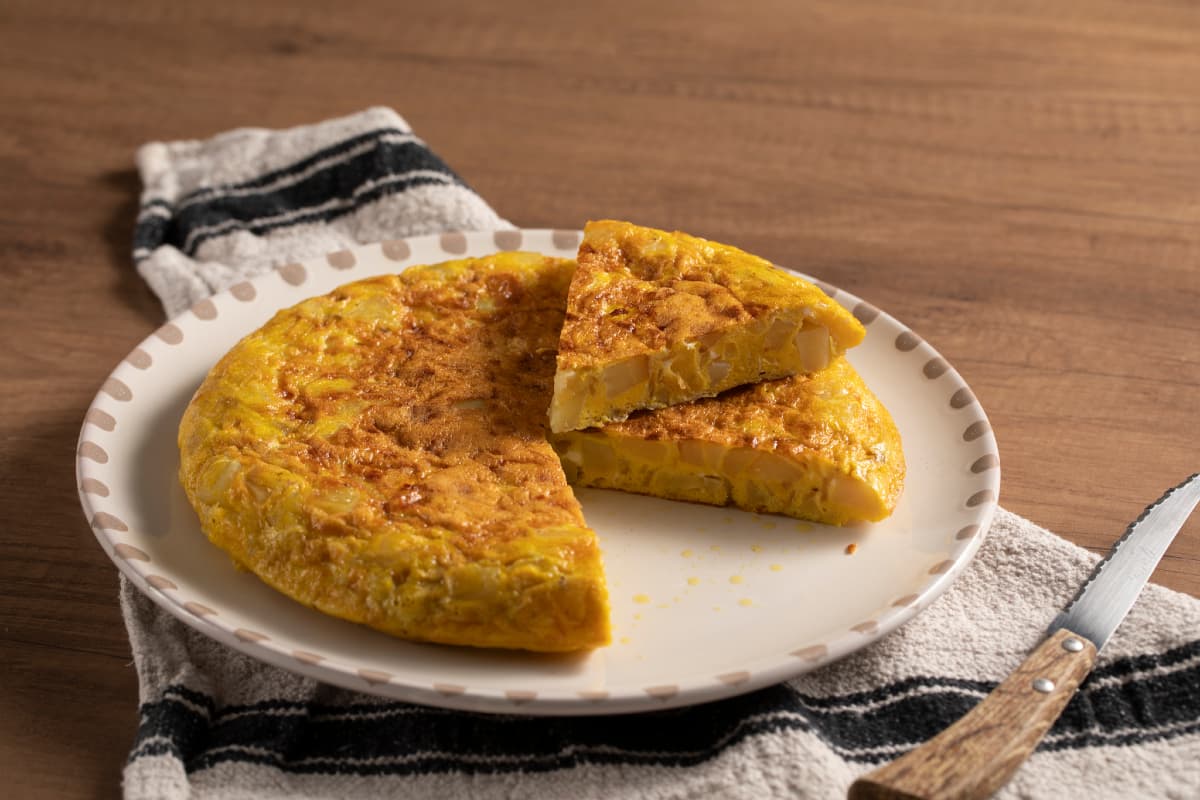
The tortilla española is what happens when a culture decides that a handful of ordinary ingredients, treated slowly and with care, are enough. It is the most common thing on the counter of any Spanish bar, a wedge of it under glass beside the coffee machine at seven in the morning and again at midnight — somehow appropriate at both hours, somehow perfect at room temperature and straight from the fridge and slightly warm and barely cooked and very thoroughly cooked. It is the dish that baffles first-time visitors and then quietly becomes the one they miss most when they leave.
For an international student, it is also exactly the right thing to learn. Five ingredients. One frying pan. No oven. An hour of gentle cooking that asks very little of you except attention. And a result that feeds four people generously, keeps in the fridge for three days, and can be eaten for breakfast, lunch, or dinner with equal conviction.
The Politics of the Tortilla (And Why Students Should Care)
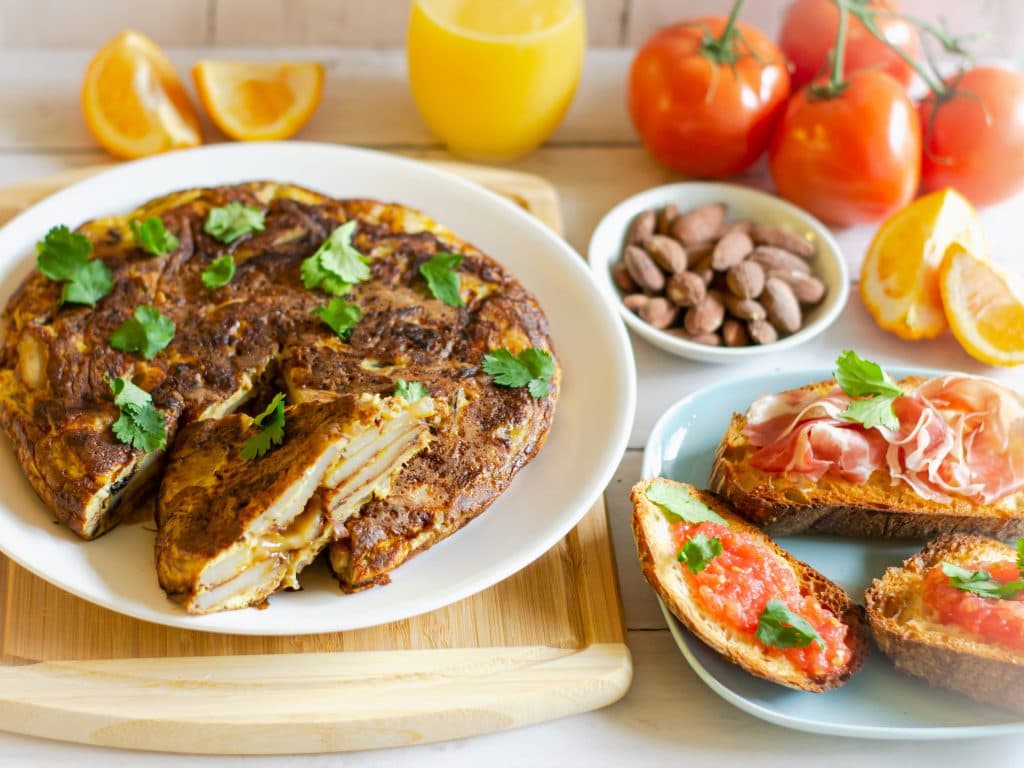
The tortilla española's natural habitat: a bar counter, mid-morning, beside a coffee.
There is exactly one argument capable of derailing an otherwise peaceful Spanish dinner table, and it is this: does a proper tortilla española contain onion?
The country is genuinely divided. Purists from Castile and parts of the north insist on potato and egg alone — sin cebolla, without onion. Much of Andalucía and the rest of the country considers onion essential, arguing that without it the interior stays dry and the flavour goes flat. The food writer Ignacio Medina once described the debate as "the only culinary question in Spain that gets personal." He was not exaggerating.
The recipe here uses onion. If you are eating with a sin cebolla Spaniard, you may want to keep that to yourself.
The history of the dish is hazy in the way that most beloved things are. The earliest written mention most food historians agree on dates to the early nineteenth century, from Navarra, where someone described feeding an army on eggs and potatoes — a dish of necessity that became, with time, a national institution. Today it appears in every tapas bar, every mercado, every student kitchen from Salamanca to Valencia. Cookbooks dedicate whole chapters to it. Spanish grandmothers have a version they insist is the only correct one. No two versions are the same.
The principle behind it is what matters. Slow-cooked potatoes, barely set eggs, a generous amount of olive oil. Patience. A good pan. The confidence to flip something large.
Ingredients
Serves 4 — one tortilla, roughly 22 cm wide, about 4–5 cm tall.
- 5 large eggs, at room temperature
- 600 g waxy potatoes (about 3 medium — Charlotte, Maris Piper, or any firm variety)
- 1 medium white onion (about 150 g), finely sliced
- 150–180 ml good olive oil — yes, this much; you will drain most of it back
- 1 teaspoon fine salt, plus more to taste
That is it. Five ingredients. If you own a frying pan with a lid (or a large plate), you can make this tonight.
A Note on Ingredients for International Students
The potatoes matter more than you think. Floury potatoes — the kind that fall apart when boiled — will turn to mash inside the tortilla. You want waxy potatoes, the kind that hold their shape when cooked. In UK supermarkets, look for Charlotte or Desiree. In Italian supermarkets, patate a pasta gialla (yellow-fleshed potatoes) work well. In France, the Charlotte and Ratte varieties are ideal. In Germany, festkochende Kartoffeln is the label you want — "firm-cooking potatoes."
The olive oil is not optional, and neither is the quantity. The potatoes are slow-cooked in oil, not fried — it is closer to a confit than a fry. You will use roughly 150–180 ml, which sounds like a lot, but nearly all of it gets drained back into a bottle or jar before you assemble the tortilla. Buy a mid-range olive oil rather than the cheapest bottle available — Carrefour, Mercadona, Conad and Albert Heijn all carry decent own-brand options that won't break a student budget.
Eggs should be as fresh as possible. The interior of a good tortilla is just barely set — some describe it as jugosa, juicy — and this requires eggs where the yolk is still vibrant and thick. If you are in Italy or Spain, the laying date is printed on the box; pick the most recent. In other European countries, the lion mark (UK) or the EU egg codes guarantee basic freshness standards.
A non-stick pan makes the flip easier. A 22–24 cm non-stick frying pan is the sweet spot for this recipe. Smaller and the tortilla will be very thick and harder to cook through; larger and it will be too thin. If you only have one larger pan, the recipe still works but the tortilla will be flatter.
Method
The whole process takes about one hour — forty minutes of slow cooking, ten minutes of assembly, and ten minutes on each side. Do not rush any part of it.
Step 1 — Prepare the potatoes and onion
Peel the potatoes and slice them thinly — about 3–4 mm — into rounds or half-moons. Consistency matters more than shape: uneven slices mean some will be overcooked while others are still raw. A mandoline makes this effortless; a sharp knife and patience work equally well.
Peel and finely slice the onion into half-moons.
Salt everything now. Toss the potato slices and onion together in a bowl with the teaspoon of salt. This draws out a little moisture and seasons the interior from the start, not just the surface.
Step 2 — Slow-cook in oil (pochar)
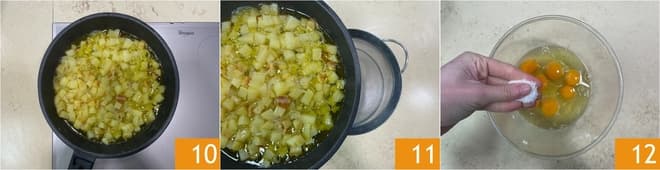
Barely simmering, not frying. The oil should shimmer, not crackle.
Pour the olive oil into the pan and set it over medium-low heat. Add the potatoes and onion. The oil should come about halfway up the potato slices. If it doesn't, add a little more.
Cook for 30–35 minutes, stirring or turning gently every five minutes. The potatoes should be completely tender — a knife should slide through with no resistance — but not golden. If they start to brown, turn the heat down. You are confiting them, not frying them.
When the potatoes are ready, drain everything through a colander set over a bowl. Save the oil. You will use some of it to cook the tortilla, and the rest keeps in a jar for roasting vegetables, dressing pasta, or making the next tortilla.
Step 3 — Beat the eggs
Crack the 5 eggs into a large bowl and beat them with a fork or whisk until the yolks and whites are fully combined — about 30 seconds. Season with a little salt.
Add the still-warm potatoes and onion to the egg mixture and stir gently to combine. Some of the potato slices will break slightly as you fold them in. This is fine and expected. Leave the mixture to sit for 5 minutes — this brief rest allows the egg to begin to soak into the potato.
Step 4 — Cook the first side
Return the pan to medium heat and add about 2 tablespoons of the drained cooking oil. When it shimmers, pour in the egg and potato mixture, spreading it evenly with a spatula.
Cook for 6–8 minutes over medium heat, gently shaking the pan every minute or so to prevent sticking. Lift the edge with a spatula and check the underside: it should be set and deep golden-brown. The top will still look wet and liquid in the centre — this is exactly right.
Run a spatula around the entire edge of the tortilla and underneath it before you attempt the flip.
Step 5 — The flip (dar la vuelta)
The flip. Confident and fast — hesitation is the enemy here.
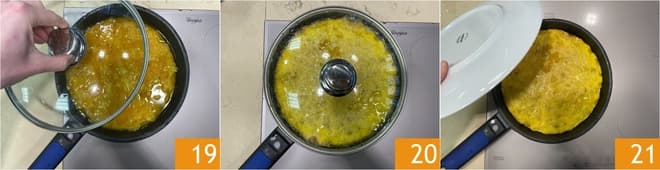
This is the step that frightens people the first time. It should not. Get a large flat plate or a pan lid that is wider than your frying pan. Place it firmly on top of the pan. In one confident movement, flip the pan and the plate together so the tortilla falls onto the plate, cooked-side up.
Slide the tortilla back into the pan, uncooked-side down. A little raw egg will run out around the edges — tuck it back in gently with the spatula.
Cook for another 4–5 minutes over medium-low heat. The tortilla should feel slightly set in the centre when you press it gently — firm at the edges, still with a little give in the middle. If you want a fully set tortilla, leave it a minute longer. If you want the classic jugosa interior — barely cooked, custardy in the centre — pull it off the heat while the centre still moves slightly.
Slide onto a plate or board and leave to cool for at least 10 minutes before cutting.
Step 6 — Rest and serve
A tortilla española is never served piping hot. It is best at room temperature, which is how you will find it in every bar in Spain. Cut into wedges like a tart, or into small cubes (pincho style) if you are serving it as a snack.
For a light dinner: a wedge of tortilla, a green salad with sherry vinegar, some bread. This is, roughly, the structure of about a quarter of all Spanish weeknight dinners.
Storage and Make-Ahead
Tortilla española is one of the few egg dishes that keeps properly in the fridge. Unlike a regular omelette, which turns rubbery overnight, the potato keeps the interior moist and the flavour deepens slightly after a day.
- Refrigerator: up to 3 days, loosely covered. Serve at room temperature or briefly warmed in a dry frying pan — do not microwave, which makes the egg tough.
- Meal prep: make a full tortilla on Sunday and eat it across three lunches during the week. With a piece of bread and some olives, it costs almost nothing and takes sixty seconds to plate.
- Not suitable for freezing. Egg-based dishes with a soft interior do not freeze well. Make it fresh.
Common Mistakes
- Potatoes are still firm inside. The poaching step was too fast or the heat was too high. The potato must be completely tender — a knife through with zero resistance — before the egg goes in. There are no shortcuts here.
- The tortilla sticks to the pan during the flip. The edge was not fully released before flipping, or the pan was not hot enough when the egg went in. Always run the spatula around and underneath before attempting the flip.
- The interior is dry and rubbery. You cooked it too long on the second side. The centre should still have a slight give when pressed. Pull it off five seconds earlier than feels comfortable.
- It tastes bland. You under-salted the potato before cooking. Season the potato slices before they go in the oil, not only the egg.
- The exterior burned before the interior set. The heat was too high during the second side. Turn it down to medium-low after the flip and be patient.
Variations Worth Trying
Once you have made the classic version confidently, the tortilla is a very forgiving base.
Tortilla with red pepper — Add one roasted red pepper (pimiento asado), drained from a jar and roughly chopped, to the egg and potato mixture. A Basque variation that adds sweetness and colour.
Tortilla with courgette — Replace about a third of the potato with thinly sliced courgette, cooked the same way in the olive oil. A lighter summer version common in Andalucía.
Tortilla sin cebolla — Simply leave out the onion. Add a small clove of garlic, very finely sliced, to the oil at the start. If anything, this version is more polarising; people feel strongly about it in both directions.
Mini tortillas in a smaller pan — Use a 16 cm pan and halve the recipe for a tortilla that serves two. Easier to flip, quicker to cook, and useful when you are cooking for one and don't want leftovers.
Tortilla sandwich (bocadillo de tortilla) — A thick slice of cold tortilla inside a crusty baguette or chapata with a smear of tomato and a little olive oil. The most common handheld lunch in Spain and, arguably, the best argument for leftovers that exists.
Why This Recipe Belongs in a Student Kitchen
The tortilla española teaches one of the things that most student cooking ignores: that time and low heat can do more for an ingredient than high heat and speed. The potatoes need thirty minutes in warm oil before they are ready. The tortilla needs to rest before it is cut. None of this is difficult — it simply requires being in the kitchen, paying occasional attention, letting the heat do the work.
There is something useful in that. Abroad, far from whatever kitchen you grew up in, you learn to cook differently — more slowly, more deliberately, with fewer familiar ingredients and no one to ask for help when something goes wrong. The tortilla española fits inside that education neatly. It asks you to trust the process rather than rush it. To notice when the potatoes are actually ready, not just nearly ready. To flip with confidence, which comes from having done it once before.
Make it on a Saturday. Leave it to cool on the counter. Invite whoever happens to be around. Eat it at room temperature with something cold and the sort of conversation that only happens when there is nowhere to be.
If you enjoyed this, the bibimbap recipe follows the same one-bowl, student-kitchen logic — different continent, same principle.