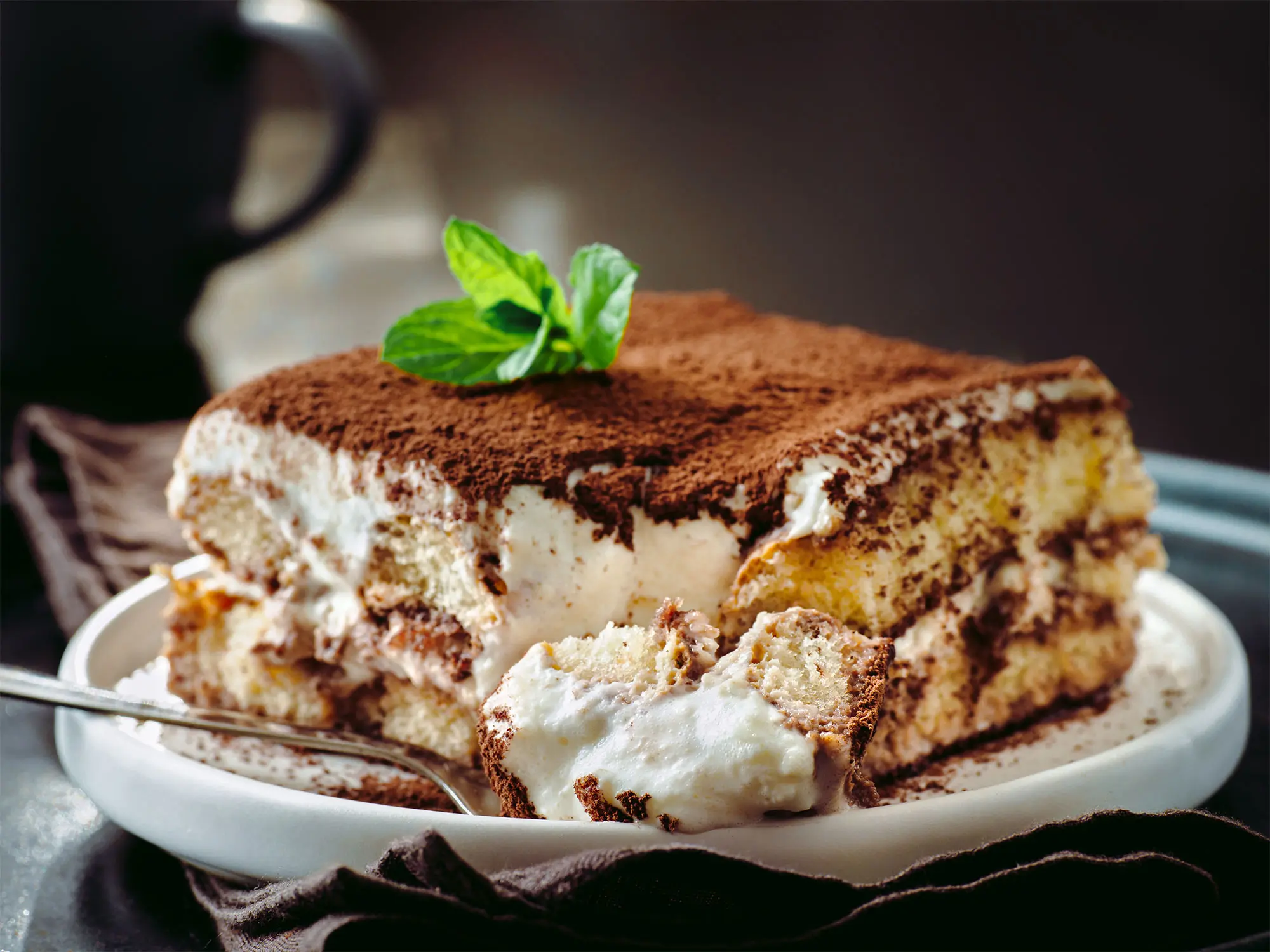
There is a moment, somewhere around the second month of living in Italy, when the supermarket stops feeling foreign. You stop translating latte intero in your head. You learn that biscotti in Italian doesn't quite mean what it does at home. And one afternoon, standing in front of a fridge that holds four ingredients and a half-empty moka, you decide to make tiramisù.
There are good reasons it should be the first Italian dessert you cook abroad. It needs no oven, which matters when your rented kitchen has one burner and a microwave older than you are. It uses six ingredients, all of which sit on a single shelf at any supermercato. And it is, quietly, one of the most loved desserts in the world — so when you put it on the table for your flatmates, the silence afterwards will tell you everything you need to know.
This is the version I make for friends who come over on a Sunday evening. It is the classic Roman-Trevisan style, slightly soft, slightly boozy, generous with cocoa. Make it once and you will make it for the rest of your life.
A Short History (and Why Students Should Care)
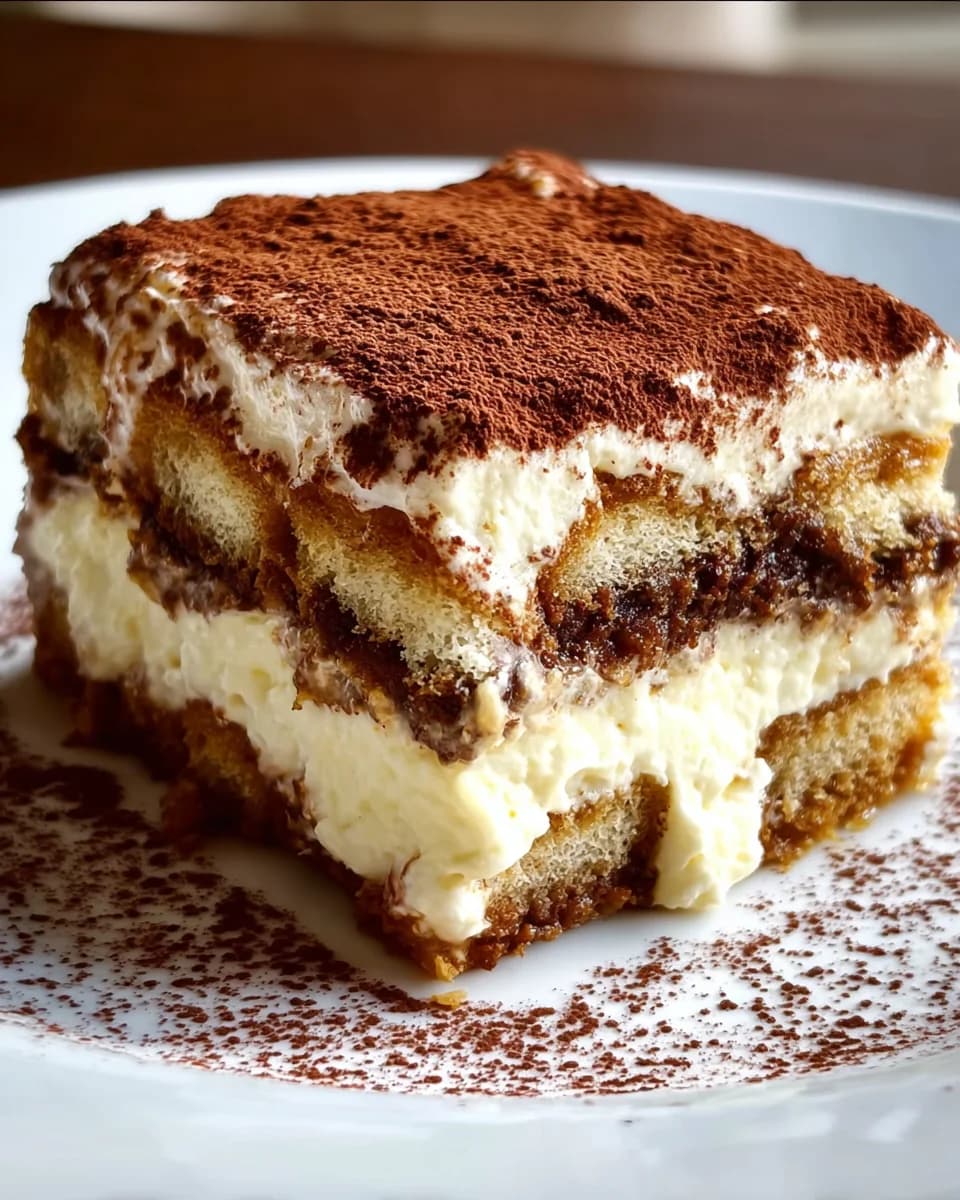
The official birthplace of tiramisù is Treviso, in the Veneto region, where in the 1970s a restaurant called Le Beccherie claimed to have invented it. Other regions — Friuli, Piedmont, even Tuscany — argue otherwise, and that argument has never really been settled. What everyone agrees on is the meaning of the name: tirami sù, "pick me up", a reference to the caffeine, the sugar, and possibly the small glass of Marsala traditionally folded into the cream.
For an international student, the history matters less than the principle behind it: Italian home cooking is built on a handful of well-chosen ingredients, treated with patience. Tiramisù is the smallest possible version of that idea. Six ingredients. No fire. No oven. Twenty minutes of work, four hours in the fridge.
If you can make tiramisù well, you have understood something about Italian food that no recipe book will explicitly teach you.
Ingredients
Serves 6 generous portions — perfect for a flat dinner.
For the cream:
- 3 large eggs, very fresh, at room temperature (separated into yolks and whites)
- 80 g caster sugar (about 6 tablespoons)
- 250 g mascarpone, cold from the fridge
- A pinch of fine salt
For the layers:
- About 200 g savoiardi (Italian ladyfingers — not sponge fingers from a bakery, the dry kind)
- 250 ml strong espresso coffee, cooled (about 4 small moka cups)
- 2 tablespoons sugar to dissolve in the coffee, optional
- Unsweetened cocoa powder, plenty, for dusting
Optional, but recommended once you've made it a few times:
- 2 tablespoons Marsala wine or dark rum, mixed into the coffee
A note on quantities: this fits a standard rectangular dish about 20 × 25 cm, or two smaller round dishes if you want to give one to a neighbour. Doubling the recipe is straightforward.
A Note on Ingredients (Especially for International Students)
If this is your first time buying these ingredients in Italy, three short pieces of advice.
Mascarpone is not cream cheese. Do not substitute Philadelphia. The texture is wrong, the fat content is wrong, and the result will be sour rather than rich. In any Italian supermarket, mascarpone sits next to the ricotta, in a small tub, usually 250 g — exactly what this recipe asks for.
Savoiardi are dry biscuits, not soft sponge. The Italian savoiardi are crisp, sugar-dusted, and shaped like flat fingers. The most common brands are Vicenzi and Balocco. They need to be dry so they soak up the coffee without collapsing. Soft "ladyfinger cake" from a bakery will turn to mush.
Eggs. Tiramisù traditionally uses raw eggs, which is why freshness matters. In Italy, you can buy eggs from small alimentari with the laying date printed on the box — always pick the most recent. If raw eggs make you nervous, see the variation at the bottom of this article.
If you are making this in a country where mascarpone is hard to find, you can blend equal parts cream cheese and heavy whipping cream as an emergency substitute, but be honest with yourself: it will be a dessert that resembles tiramisù, not a tiramisù.
Method
The whole thing takes around twenty minutes of active work, plus four hours of resting. Read through the steps once before you start.
Step 1 — Make the coffee and let it cool
Brew about 250 ml of strong coffee. The classic choice is a moka — three or four small pots' worth — but a French press or any concentrated coffee will do. Stir in 2 tablespoons of sugar if you like (I do — it balances the cocoa later) and the optional Marsala. Pour it into a wide, shallow bowl and leave it to come down to room temperature. Do not skip this. Hot coffee will scramble the cream the moment they meet.
Step 2 — Whip the yolks with the sugar
Separate the eggs carefully. Put the yolks into a large mixing bowl and the whites into a smaller, very clean, completely fat-free bowl (any trace of yolk and the whites won't whip).
Add the sugar to the yolks and beat with an electric whisk for at least four minutes, until the mixture is pale, almost white, thick, and ribbons off the whisk when you lift it. This is the structural backbone of the cream — under-whipping here is the most common reason a tiramisù turns out runny.
Step 3 — Fold in the mascarpone
Add the mascarpone to the yolk mixture one large spoonful at a time, beating gently between additions. Cold mascarpone seizes if you dump it in all at once. After the last spoonful, the cream should be smooth, glossy, and just thick enough to hold a soft peak.
Step 4 — Whip the egg whites with a pinch of salt
Add a pinch of salt to the whites and whip them until they hold firm peaks — when you tilt the bowl, they shouldn't slide.
Then, in three additions, fold the whites into the mascarpone cream with a large spoon, lifting from the bottom of the bowl up over the top. Slow, patient movements. The goal is to lighten the cream without knocking the air out. After the third fold, you should have a pale, fluffy mixture that holds its shape but still falls softly.
Step 5 — Dip the savoiardi (the only step that takes practice)
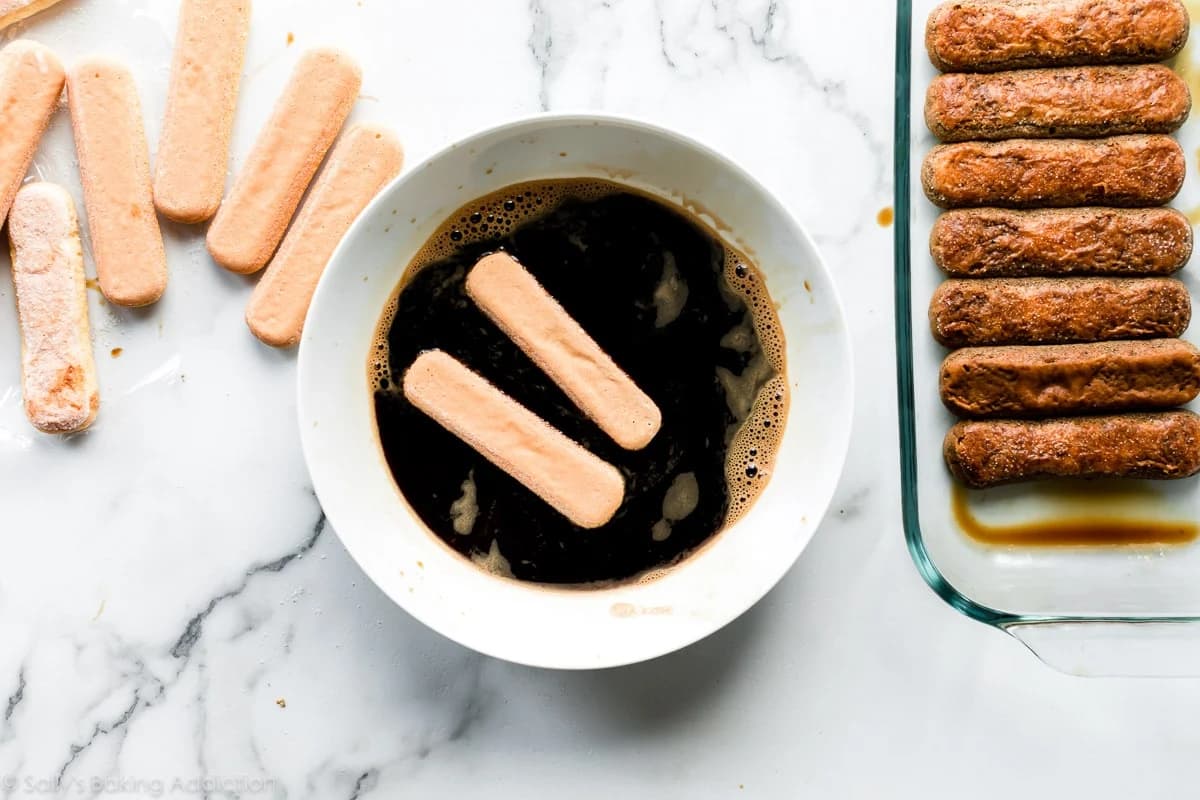
This is where most first-time tiramisùs fail. The savoiardi must be dipped, not soaked.
Hold each biscuit by one end and dunk it in the coffee for about one second on each side. No more. The outside should be wet, the centre still firm. If the biscuit goes limp in your fingers, you've held it too long — the next one, count "one" and pull it out.
Lay the dipped biscuits in a single layer at the bottom of your dish, packing them in tightly. Break the last one or two if needed to fill the corners.
Step 6 — Layer
Spread half the cream over the biscuits in a smooth, even layer, all the way to the edges. Tap the dish gently on the counter to settle it.
Repeat: another layer of dipped savoiardi, then the rest of the cream on top.
Step 7 — Rest
Cover the dish loosely with cling film (don't let the film touch the cream) and put it in the fridge for at least four hours, ideally overnight. This is non-negotiable. Tiramisù made the same day is fine; tiramisù made the night before is excellent. The biscuits soften, the flavours deepen, and the cream firms up into something silky and sliceable.
Step 8 — Dust with cocoa, and serve
Just before serving, dust the top generously with unsweetened cocoa powder through a fine sieve. Don't dust earlier — cocoa absorbs moisture from the cream and turns from velvet to mud within an hour.
Serve cold, in deep spoonfuls.
Storage and Make-Ahead
Tiramisù is one of the rare desserts that improves overnight. Made on a Saturday morning, it is at its peak by Sunday lunch.
- Refrigerator: up to 3 days in an airtight container. After day three, the biscuits start losing their texture.
- Freezer: yes, surprisingly well. Wrap individual portions in cling film, freeze, and thaw in the fridge for 6–8 hours before eating. Do not refreeze.
For students cooking on a budget, this last point matters: a tiramisù made on Sunday can be portioned, frozen, and pulled out across two weeks of late study nights, with no real loss of quality.
Common Mistakes (and How to Avoid Them)
- Runny cream. You under-whipped the yolks, or you folded the whites in too aggressively. Beat the yolks until truly pale and ribbon-y. Fold gently.
- Soggy biscuits. You held them in the coffee too long. One second per side, no more.
- Bitter aftertaste. Your coffee was too strong, or you forgot to sweeten it. Aim for espresso strength but with sugar dissolved in.
- Bland tiramisù. Skipped the resting time. Four hours minimum, overnight ideally.
- Cream tastes sour, not rich. You used cream cheese instead of mascarpone. There is no fix; start again.
Variations Worth Trying
Once you've made the classic version two or three times, try these small twists.
- Eggless tiramisù — Replace the egg-based cream with 250 ml of cold heavy whipping cream whipped to soft peaks and folded into the mascarpone with the sugar. Lighter, slightly less rich, and friendlier for guests who avoid raw eggs.
- Pistachio tiramisù — Stir 3 tablespoons of unsweetened pistachio paste into the mascarpone. Replace half the cocoa dusting with chopped pistachios. A modern Sicilian variation that has become hugely popular in Italy in the last few years.
- Strawberry tiramisù — Skip the coffee, dip the savoiardi briefly in milk, and layer with sliced strawberries between the cream. A summer version, no caffeine, suitable for younger guests.
- Mini tiramisù in jars — Layer in small glass jars instead of one big dish. Easy to transport to a friend's flat, and they look much more impressive than they should.
Why This Recipe Belongs in a Student Kitchen
There is a particular kind of homesickness that hits international students around the third or fourth month abroad — usually in November, when the days get short and your home country celebrates a holiday you can't get to. Cooking helps. Cooking something Italian, in Italy, helps even more — it stops feeling like you are visiting someone else's country and starts feeling like you are slowly building a life inside it.
Tiramisù is a small ritual. Six ingredients. Twenty minutes of work. Four hours of waiting, during which you can study, call home, or watch the rain. And then a dish that, when you serve it, makes a foreign kitchen feel briefly, deeply, like your own.
Make it on a Sunday. Invite the people from your floor. Don't apologise if it isn't perfect the first time — it will be the second.