Turin: Italy's First Capital
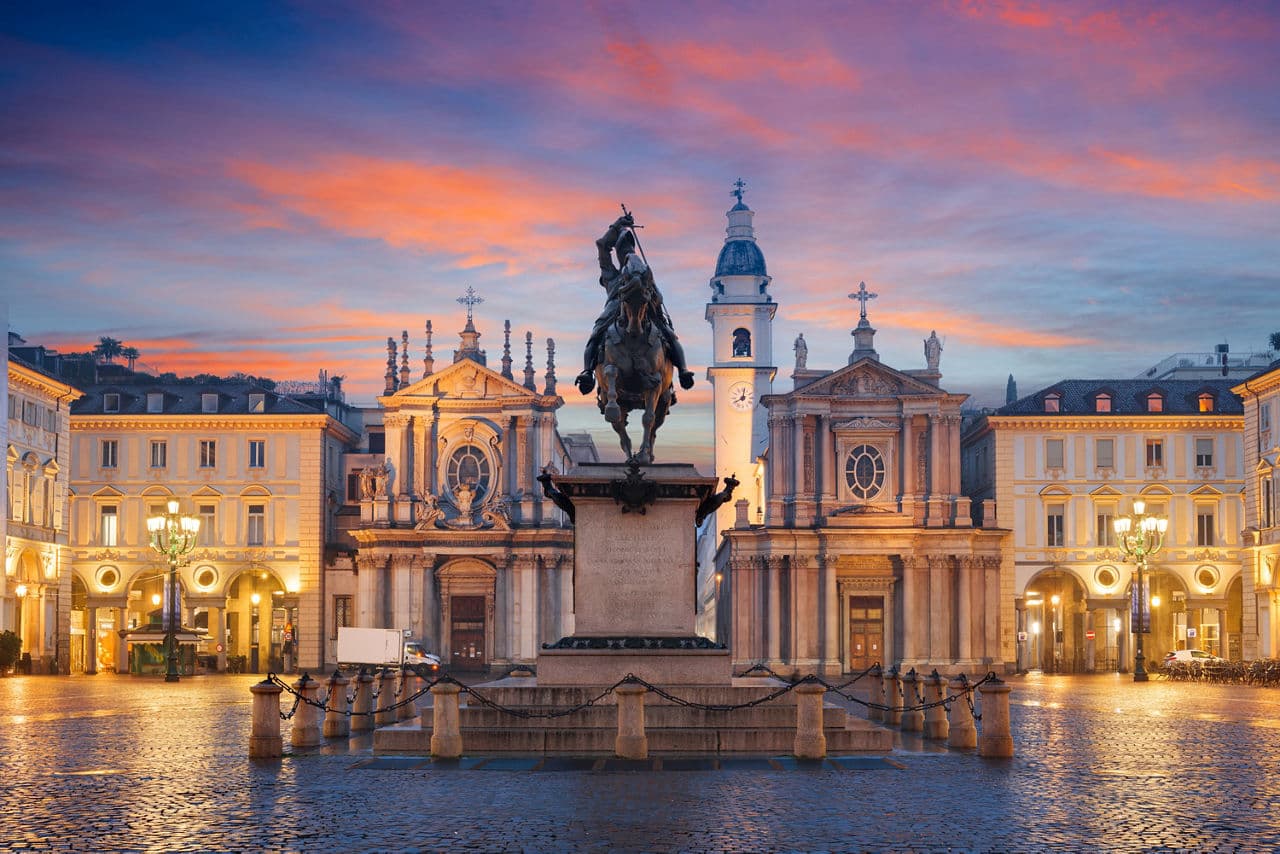
Turin, the first capital of unified Italy, is a city filled with marvels — from its tallest building, the Mole Antonelliana, to its elegant and prosperous atmosphere, a synonym of the great monarchic history this city holds. For us Italians, Turin is an everlasting symbol of elegance and national unity.
In addition to the beauty this city holds, Turin is also home to numerous educational institutions of great relevance. For example, the Politecnico di Torino (one of the most important universities in Italy, known for the autonomous vehicles roaming around campus and its advancements in the field of artificial intelligence); UniTo (a more classical university, which owns buildings of singular beauty and relevance); and finally, ESCP Business School (a European business school with campuses located in Paris, Madrid, London, Warsaw, and Berlin).
Living in Turin: A Student's Standpoint
From the point of view of an international student, coming to live in Turin is definitely a radical change from what most people would expect from a city. This is because Turin does not really give off those "big city" vibes you would expect from one of the main cities of a country like Italy.
Turin is a relatively small city. The only place one would really want to live in is the centre and its adjacent neighbourhoods, like Crocetta or San Salvario. This is because outside the centre, there is really not much going on in terms of student life. However, this is not a bad sign at all. In fact, Turin is one of the most "liveable" and student-friendly cities I have ever been to. In addition to that, the presence of many universities ensures a large population of students coming from all over the world.
Turin's International Atmosphere
One of the main points I usually stress when talking about Turin is its unexpected international atmosphere. For someone coming from Rome, where one would expect a large quantity of tourists and workers from all over the world due to the presence of many United Nations institutions, and having lived in London — a famously multicultural city — Turin is definitely a surprise from this point of view.
From my experience, in Turin it is almost more common to hear someone speak in English or another foreign language than to find someone who speaks Italian — especially among younger people. Trust me, this is something which is very rare in a country like Italy. It also means the city is accessible even if a student hasn't mastered the Italian language. Of course, as in every place in the world, it is always good practice to have at least a basic understanding of the local language; that said, in Turin, this is not as big a deal as it may be in other Italian cities.
Renting in Turin: The Good Side
When it comes to renting, Turin is very price-advantageous compared to neighbouring cities such as Milan, where the prices of renting an apartment are significantly higher than in almost any other city in the Italian Peninsula. Even when renting in the city centre, prices are not going to be too high — a very good thing, especially for students.
Moreover, the majority of buildings in the city centre have been renovated recently: from new elevators to new interiors. Apartments in the centre of the city are generally newer compared to apartments you may find outside the city centre and in surrounding areas. In my opinion, this is a very good thing, as the value of the rent you're paying is definitely higher than it would be for an old apartment.
Overall, in my experience, it has been much easier to find higher-quality apartments with new interiors at an accessible price in Turin than in the other cities I have visited, including my hometown.
Renting in Turin: The Main Problem
However, the main issue I have found when renting in Turin is the agency cost.
Because this city is home to many universities of great national and international relevance, many landlords and agencies take advantage of this. It is important to mention that in Italy, agency fees are covered by the tenant, not the landlord.
Many agencies require at least two months' rent as agency fees, which is definitely overpriced considering some universities — like ESCP — only allow students to stay in the city for one year. Having to sign a contract with a duration of 12 months or less, and having to pay two months' worth of agency fees, is outrageous.
Moreover, many agencies and landlords tend to take advantage of non-Italians, asking for prices which are evidently higher than the actual market rate in a city like Turin. More than once, I had to stress the fact that I came from Rome and that they should therefore avoid trying to scam me into paying a price clearly above what one would actually rent a house for in this city. Funny enough, once I reminded the various agencies involved that I was an Italian citizen originally from Rome, they magically reduced their agency fee to a single month and suddenly became much more lenient in price negotiations.
This is one key factor to take into account, especially if you're an international student looking to live in Italy.
In Conclusion
Renting in this city is not a hard endeavour at all. It just requires you to know what tactics agencies use and to try to avoid them at all costs. Other than this small issue, people from this city are generally very kind and respectful to everyone.
Coming to live in Turin will most definitely set you up for a lifetime-rewarding experience in Italy, in a city which is not as famous as the rest of the well-known Italian destinations. Thanks to its strong international atmosphere, great beauty, rich history, and proximity to many attractions just outside the city, Turin is well worth choosing. I will be sure to upload articles on all the relevant places to visit close to the city — they are really worth a stop.