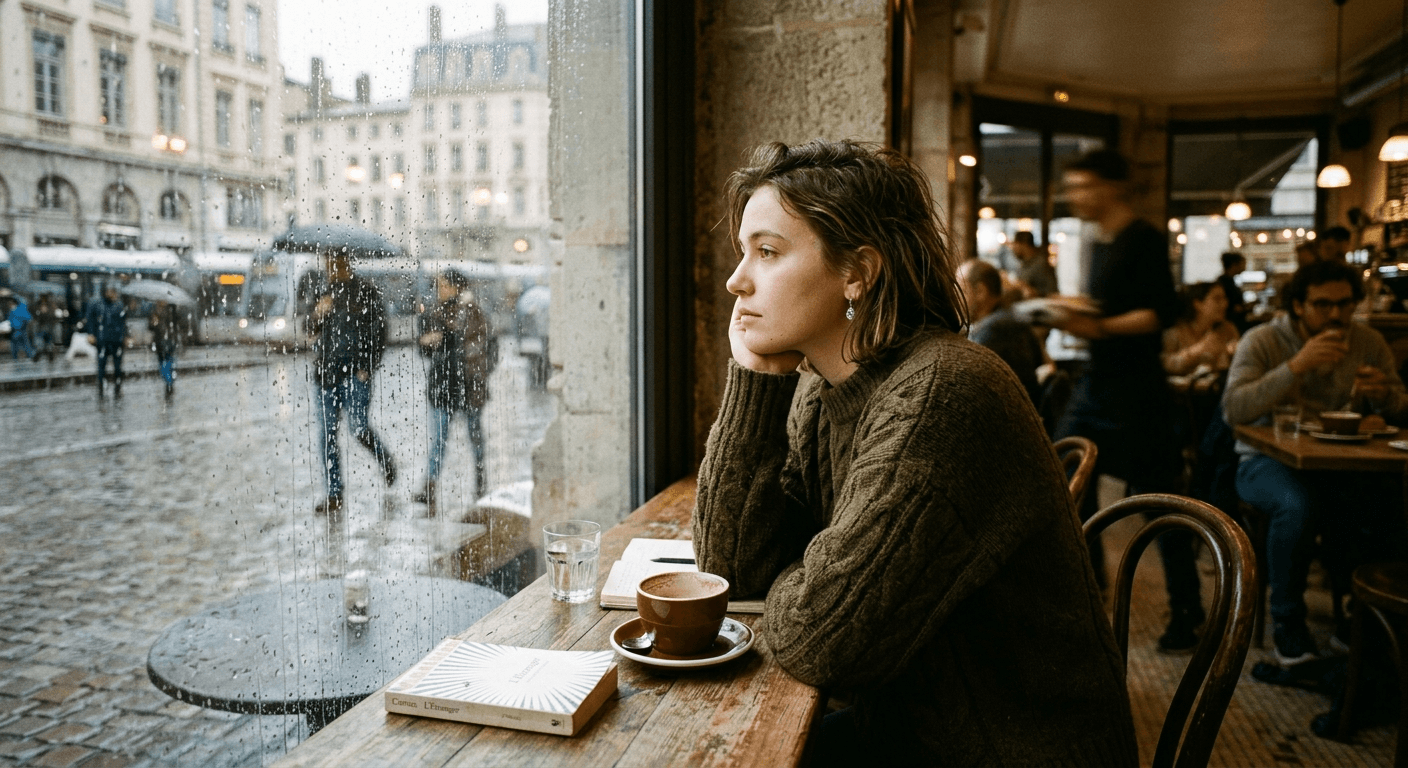
Living abroad as a student is often imagined as something bright, fast, and full. New cities, new languages, new people, new versions of yourself. And in some ways, it is all of those things. There are moments that feel cinematic at first—the first walk through a neighborhood you had only seen online, the first coffee in a place that no longer feels entirely foreign, the first time you realize you are building a life somewhere you once only dreamed about.
But what stays with you is rarely just the big moments.
More often, it is the smaller ones. The ones that do not look important while they are happening. The walk home at dusk after a long day. The comfort of recognizing the person at your local café. The strange relief of finding a routine in a place that once felt completely unfamiliar. These are the things that slowly shape the experience from something exciting into something real.
One of the quietest lessons of student life abroad is that meaning does not always arrive dramatically. Sometimes it gathers in ordinary moments, almost without announcing itself.

The unnoticed rhythm
In the beginning, life abroad can feel slightly performative, even when no one is watching. You want to do it well. You want to appreciate the city properly, to make the most of the opportunity, to become the kind of person who fits naturally into this new environment. There can be a pressure to keep moving, to keep saying yes, to keep proving to yourself that this experience is as full as it is supposed to be.
But eventually that pressure becomes tiring.
And after a while, something gentler begins to replace it. A rhythm appears.
It happens in simple ways. You start taking the same route to class without thinking about it. You know which supermarket is worth the extra walk. You learn what time the light hits your room in the late afternoon. You begin to understand your week not as a series of events, but as a pattern you have made for yourself.
The same walk to class.
The same bench in the library.
The same bakery on the corner.
The same quiet evening habit that helps the day settle.
These repetitions may seem small, but they do important work. They turn a temporary place into a lived one. They soften the edges of unfamiliarity. They create continuity, and continuity is often what makes a person feel at home.
Why the small things matter more than expected
When people talk about living abroad, they often focus on what is visible: the destinations, the discoveries, the milestones. Those things matter, of course. They become part of the story you tell later. But daily life is not made up of milestones. It is made up of mornings, transitions, moods, habits, and passing thoughts.
That is why the little things matter so much.
A good day abroad is not always a memorable one. Sometimes it is simply a day that feels balanced. You studied enough. You ate something comforting. You had one nice interaction. You noticed the weather. You walked somewhere without checking your phone too much. Nothing dramatic happened, and yet the day felt complete.
There is something deeply reassuring about that kind of completeness. It reminds you that your life does not need to be extraordinary every day in order to be meaningful. In fact, some of the most grounding moments abroad are the least visible ones.
A warm drink carried through cold streets.
The sound of your keys in the door at the end of the day.
Clean sheets after a difficult week.
A message from home received at the right time.
A familiar face across campus.
These things are easy to dismiss because they are not spectacular. But they often hold more emotional weight than expected. They make life feel inhabited.
The invisible difficulty
There is also another reason the little things matter: they become especially important when life feels uncertain.
One of the hardest parts of being an international student is that social uncertainty can be difficult to explain. It may look from the outside as though everyone has found their people quickly, as though everyone else already belongs somewhere. Meanwhile, your own experience might feel slower, quieter, less settled.
Loneliness abroad is often quieter than people imagine. It does not always look like isolation. Sometimes it looks like being surrounded by people and still feeling slightly unplaced. Sometimes it is not sadness exactly, but a low-level awareness that ease has not arrived yet.
It can appear in very ordinary moments:
- not knowing who to text on a Sunday afternoon
- feeling unsure whether to join a group already in conversation
- returning to a room that still feels temporary
- having a good day and still feeling vaguely untethered by evening
This kind of loneliness is not dramatic, which is part of what makes it difficult. It can be easy to minimize, especially if your life looks good from the outside. But it is real, and many students carry it more quietly than people realize.
That is why paying attention to small comforts matters so much. When everything else feels in progress, ordinary anchors become emotionally significant. A routine meal. A familiar playlist. A place you return to often. A person you can greet without hesitation. Small things do not solve loneliness completely, but they make it easier to live through. They create continuity while the rest is still forming.
What changed things
For many people, connection abroad does not happen all at once. It is less like a breakthrough and more like a slow accumulation of effort.
What often changes things is not becoming more impressive or more outgoing. It is becoming more patient.
Friendship in a new country can require repetition. You may need to invite someone more than once. You may need to keep showing up to the same place long enough for people to recognize you. You may need to tolerate some awkwardness without deciding that it means failure. This is uncomfortable, especially if you are used to relationships forming more naturally. But there is something reassuring in learning that connection can grow through consistency, not just chemistry.
Sometimes what helps most is very simple:
- saying yes to something even when you feel hesitant
- inviting someone for coffee without overthinking it
- returning to the same community space regularly
- allowing conversations to stay light before expecting depth
- understanding that familiarity often comes before closeness
Not every effort leads somewhere. That can be discouraging. But meaningful relationships rarely arrive on command. They usually form in the background while you keep participating in your own life.
Eventually, people begin to feel less like strangers. Places begin to hold memory. You stop entering every room as if you need to prove something. You begin to arrive as yourself.
Learning to stay
There is a moment, sometimes subtle and easy to miss, when you stop moving through a place like a visitor.
You stop planning every free day as if it needs to justify your being there. You stop trying to collect experiences at the same speed you collected expectations before arriving. Instead, you begin to stay.
Staying does not mean becoming passive. It means allowing your life to deepen rather than constantly expand. It means returning to things. Repeating them. Letting them become part of you.
You might stay a little longer at the café where you like the light.
You might walk the long way home because it helps you think.
You might spend an evening cooking instead of going out, and not feel guilty about it.
You might let a day be ordinary without wondering whether you wasted it.
This is a different kind of attention. Less restless, more settled.
There is dignity in that shift. In a culture that often celebrates constant movement, learning how to stay with your own life is its own form of maturity.
The comfort of routine
Routine is sometimes misunderstood as something dull, especially in a chapter of life that is supposed to be adventurous. But abroad, routine can feel quietly luxurious. Not luxurious in the loud sense, but in the sense of steadiness, clarity, and peace.
A routine tells you where to place yourself in the day. It saves energy. It reduces the number of emotional decisions you need to make. It gives shape to time.
This might mean:
- starting the morning slowly instead of reaching for your phone immediately
- choosing one or two places you return to every week
- setting aside time for study that does not consume the whole day
- building evening habits that make your room feel softer and more personal
- protecting time to rest without needing to earn it first
These routines can be very modest, but they create a sense of internal order. They remind you that even if you are far from home, you are still capable of making a life that feels livable.
There is also comfort in predictability when so much else remains uncertain. Classes change. Social plans fall through. Seasons shift. You miss home unexpectedly. But your own habits can remain. They become a form of self-trust.
Noticing beauty without turning it into performance
One of the pleasures of living abroad is that beauty often appears in places you did not plan for. A street at golden hour. A quiet bookstore. The way people linger over lunch. The shape of old buildings against a grey sky. A tram ride that feels peaceful for no particular reason.
But there is a difference between noticing beauty and trying to perform your appreciation of it.
At first, it can be tempting to document everything, to make every pleasant moment feel worthy of being framed, posted, or turned into evidence of a life well lived. That impulse is understandable. But some of the most valuable experiences abroad become more meaningful when you allow them to remain private.
Not every beautiful moment needs to become content.
Not every quiet afternoon needs to be optimized.
Not every lovely detail needs to be shared in order to count.
Sometimes, beauty is most nourishing when it is simply noticed. When it passes through you and stays there for a while. When it belongs only to the day itself.
This kind of private appreciation can make life feel richer. It allows you to experience your surroundings more directly, without always stepping outside them to evaluate them.
A slower idea of living well
For students who care about aesthetics, atmosphere, and quality of life, there can be a temptation to define “living well” in visual terms. A beautiful apartment, a refined wardrobe, elegant cafés, thoughtful routines. There is nothing wrong with appreciating those things. They can genuinely add pleasure to daily life.
But living well abroad becomes much more sustainable when it is defined less by appearance and more by feeling.
Living well might mean:
- having enough calm in your week to think clearly
- creating a space that feels restful, even if it is small
- learning where your energy goes and protecting it
- eating in a way that comforts rather than just impresses
- spending money on what supports your actual life, not just an image of it
- choosing depth over excess
This is a quieter form of elegance. One that is rooted in intention rather than display.
There is something mature about understanding that a good life does not always need to look dramatic. Sometimes it simply needs to feel coherent.
Personal growth that happens in plain sight
One of the strange things about living abroad is that growth often happens so gradually that you do not notice it until later.
You learn how to navigate systems that once intimidated you.
You make decisions without asking for reassurance.
You recover from difficult days more quickly.
You become less afraid of doing things alone.
You learn what kind of company feels nourishing and what kind only fills space.
None of this is loud. There may be no clear moment where you can say, now I have changed. But the evidence accumulates. In the way you carry yourself. In the problems that no longer feel impossible. In the fact that things which once exhausted you have become part of your ordinary competence.
This growth deserves more recognition than it often gets. Academic success is visible. Social success is visible. But the inner work of becoming steadier, kinder to yourself, more adaptable, more observant—those changes are just as important.
And they are often built through the small moments you almost overlook.
What remains memorable
When you think back on a chapter of life abroad, what remains is rarely just a list of major events. Memory tends to keep the atmosphere of things. A tone, a feeling, a set of details.
You remember the window seat where you liked to sit.
The smell of the bakery in the morning.
The sound of your flat late at night.
The street you walked when you needed to clear your head.
The kind of tiredness that followed a good day.
The person who made you feel less alone without making a big show of it.
These details are not small in the way they function emotionally. They are the texture of a life. They are what turn an experience from abstract to intimate.
That is why enjoying the little things matters. Not because they are all you need, and not because bigger moments do not matter too. But because small things are often what make an unfamiliar life feel inhabitable. They are what give shape to your days while the larger story is still unfolding.
A quieter conclusion
There is a lot of pressure, explicit and unspoken, to make student life abroad look meaningful. To turn it into proof of growth, confidence, beauty, independence, success. And some of those things may well emerge. But the most honest version of the experience is usually more ordinary than that.
It is made of repeated mornings, uncertain afternoons, gradually easier evenings. It is made of effort, discomfort, adjustment, and occasional joy that arrives without warning. It is made of simple pleasures that grow larger because they are yours.
To enjoy the little things while living abroad is not to settle for less. It is to understand where the substance of life actually lives.
Not only in milestones.
Not only in visible achievements.
But in the quiet steadiness of daily experience.
In the end, those little things are often what stay with you longest. They are what make a place begin to feel less like a backdrop and more like part of your life. And sometimes, without realizing it, they become the very reason the experience mattered so much.